El Niño Winter 2026-27 and the Power Grid: How to Plan for Outages and Heat Your Home Safely
Forecasters are calling this one of the strongest El Niño events on record, and grid regulators are warning that the coming winter could test the power system in ways that are hard to predict. A warmer-than-usual season on average doesn't mean a quiet one. Here's what the latest federal outlooks actually say about winter 2026-27, why El Niño matters for your electricity, and how to build a simple plan to keep your household warm and safe if the power goes out.
What the Forecasters Are Saying About Winter 2026-27
NOAA's U.S. Winter Outlook, released October 15, says El Niño will likely shape the season from December 2026 through February 2027. The headline pattern:
- Warmer than average across the northern U.S., including northern California, the Pacific Northwest, the Midwest, the Mississippi Valley, much of the East, and Alaska.
- Wetter than average across the southern tier, from the Southwest to the Southeast, and along the East Coast.
- Drought improving in the Southwest, Southern Great Plains, Southeast and parts of the East Coast, but developing or worsening in parts of the northern Rockies, northeastern Oregon and eastern Washington.
The National Weather Service's director, Ken Graham, put it plainly in that release: a very strong El Niño tends to shift the jet stream south and east, which "tilts the odds toward stormier weather across the South," and heavy rain on dry ground can bring flash floods and mudslides.
NOAA's Climate Prediction Center updated the outlook on November 19. Its latest seasonal discussion says a strong El Niño continues, is forecast to last through January-March 2027, and "is likely to be the major influence on temperatures and precipitation this winter." Above-normal temperature odds exceed 50% across the Northeast, Great Lakes, Upper Mississippi Valley and Pacific Northwest.
Why El Niño Matters for the Power Grid
Two federal grid reports released the week before Thanksgiving explain the concern.
FERC: cold snaps, ice and drought
The Federal Energy Regulatory Commission's staff Winter Energy Market and Electric Reliability Assessment (November 19, 2026) cites NOAA's forecast of a 100% chance of very strong El Niño conditions this winter, with an 83% chance of a historic event stronger than any in more than 75 years. Key points for households:
- The shifting weather pattern is expected to raise the risk of polar vortex disruptions and extreme cold in the central and eastern United States, even in a mild season overall.
- When extreme cold covers a wide area, neighboring grids have less power to share with each other at the very moment everyone's demand is high.
- A very strong El Niño can bring more storms to the southern and coastal U.S., including atmospheric rivers. When cold arrives with precipitation, icing can take down transmission lines.
- Extreme cold can also knock generators offline.
- In the West, warm, dry conditions and drought are expected to cut hydropower at major dams on the Colorado River system.
NERC: enough supply for a normal winter, but not every winter
The North American Electric Reliability Corporation's 2026-2027 Winter Reliability Assessment, released November 18, has some good news: new power plants, delayed retirements and better cold-weather performance have improved the outlook. All areas have enough resources for a normal winter peak. But NERC warns that extreme, wide-area winter conditions could still cause electricity supply shortfalls, and that El Niño "introduces an additional layer of unpredictability."
NERC CEO Jim Robb said operators may need "everything in their tool kit—including requests for emergency support—to maintain reliable operations." Demand is also rising fast, driven mainly by data centers and electrification, and NERC expects higher winter peaks in 21 of its 23 assessment areas. It also flags fuel risk for gas-fired plants during long cold spells; for example, gas generators in the Pacific Northwest are mostly single-fuel.
What a bad week looks like
Last winter offers a reminder. Winter Storm Fern in January 2026 brought widespread ice from Texas to Virginia. According to PowerOutage.us's analysis, about 1.1 million customers were without power at the peak on January 25. Tennessee had about 345,000 outages and Mississippi about 189,000. Mississippi, where ice topped an inch, needed nearly two weeks to restore 98% of customers. NERC noted that overlapping arctic air masses that January showed extreme conditions can last 10 days or more.
Most winter outages won't be caused by the grid running short of power. They'll be the familiar kind: ice and wind bringing down trees and lines in your neighborhood. Either way, the plan at home is the same.
Build Your Winter Power Outage Plan
You don't need a bunker. You need to know how you'll stay warm, informed, fed and safe for at least three days, and ideally longer. Use this as a checklist.
1. List what depends on electricity
Ready.gov recommends starting with an inventory of everything in your home that needs power. Think beyond lights:
- Your furnace (most gas furnaces still need electricity to run the blower and controls)
- Well pumps, sump pumps and electric water heaters
- Medical devices such as oxygen concentrators and CPAP machines, plus refrigerated medicines
- Garage door openers, electric locks and elevators
- Cordless home phones and internet routers
For anything medical, talk to your provider now about a backup plan and how long medicines can stay safe at room temperature. If someone in your household depends on powered equipment, many utilities also run medical-need programs; call yours to ask.
2. Decide how you'll stay warm
Pick your plan before the storm, not during it:
- Stay home and stay warm: choose one room to heat and live in, ideally an interior room with few windows. Close off the rest of the house, hang blankets over doorways, and layer clothing, hats and sleeping bags.
- Have a safe backup heat source: a properly vented, inspected fireplace or wood stove, or an indoor-rated heater used exactly as the manufacturer allows. See the safety rules below.
- Know where you'll go: the American Red Cross advises going somewhere with heat if it gets dangerously cold. Note a friend's or relative's home outside your area, and check how your city announces warming centers.
3. Stock supplies for at least three days
The Red Cross suggests storing non-perishable food and water for at least two weeks in case of a long outage. A practical winter list:
- Water (about a gallon per person per day) and food that needs no cooking
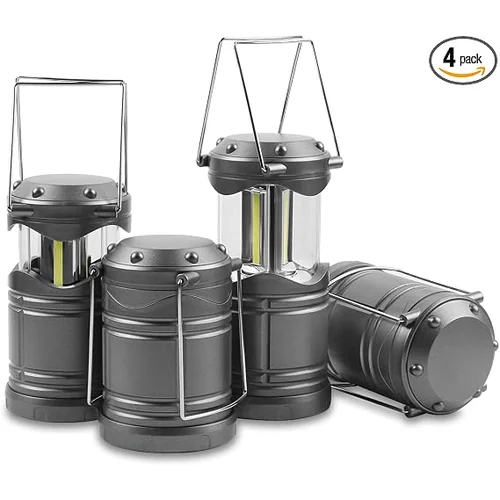
- Flashlights or LED lanterns for every household member, plus extra batteries
- Warm layers, blankets and sleeping bags rated for cold
- A battery or hand-crank radio for alerts
- Power banks for phones
- A first aid kit and a supply of medications
- A fridge and freezer thermometer
- Pet food and supplies
Our 72-hour emergency kit guide and home power outage kit checklist cover the details.
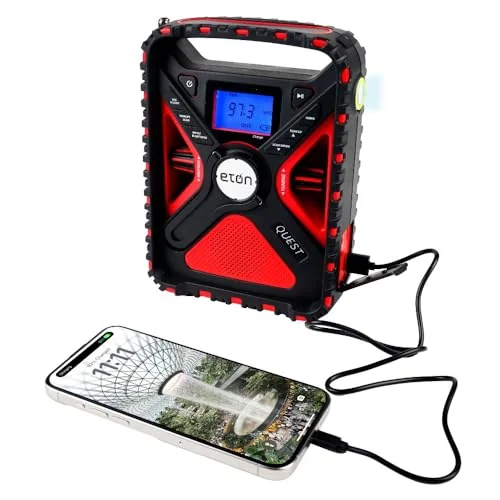
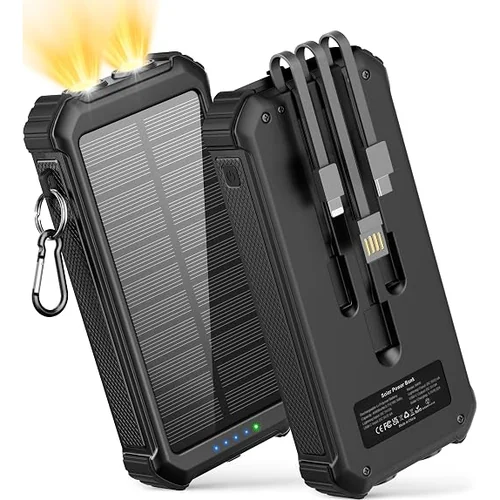
4. Stay informed when the power and internet are down
Ready.gov's winter weather page recommends signing up for your community's warning system and keeping a NOAA Weather Radio. Learn the difference between a Winter Storm Watch (possible, usually 12 to 48 hours ahead) and a Winter Storm Warning (imminent or happening, usually 12 to 24 hours ahead). Save your utility's outage number and outage map in your phone, and keep a paper list of key contacts. Our guide to the best emergency radios can help you pick one.
5. Protect your food and pipes
Ready.gov says a closed refrigerator keeps food cold for about 4 hours, and a full freezer holds its temperature for about 48 hours. Keep the doors shut and use coolers with ice for longer outages. Before a cold snap, Ready.gov recommends sealing out drafts with insulation, caulking and weather stripping, and learning how to keep your pipes from freezing. Know where your main water shut-off is in case a pipe bursts.
6. Plan for backup power, if it makes sense
A portable power station can run phones, lights, a CPAP or a modem. A generator can run a fridge, a sump pump or, if properly installed, a furnace blower. If you go the generator route, read the safety section below first, and see our guide to modern off-grid and backup power options.
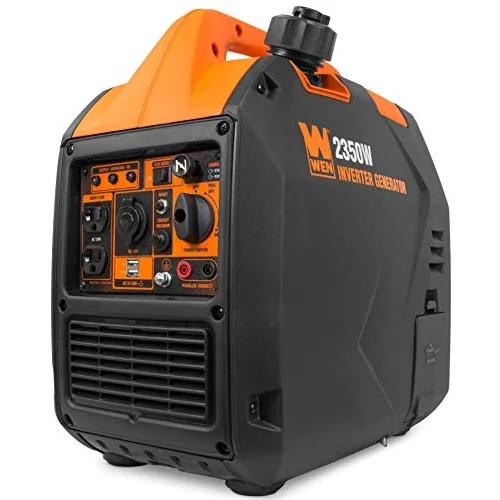
How to Heat Your Home Safely Without Power
This is where winter outages turn deadly. People get cold, improvise, and end up with a fire or carbon monoxide (CO) poisoning.
Carbon monoxide: the silent risk
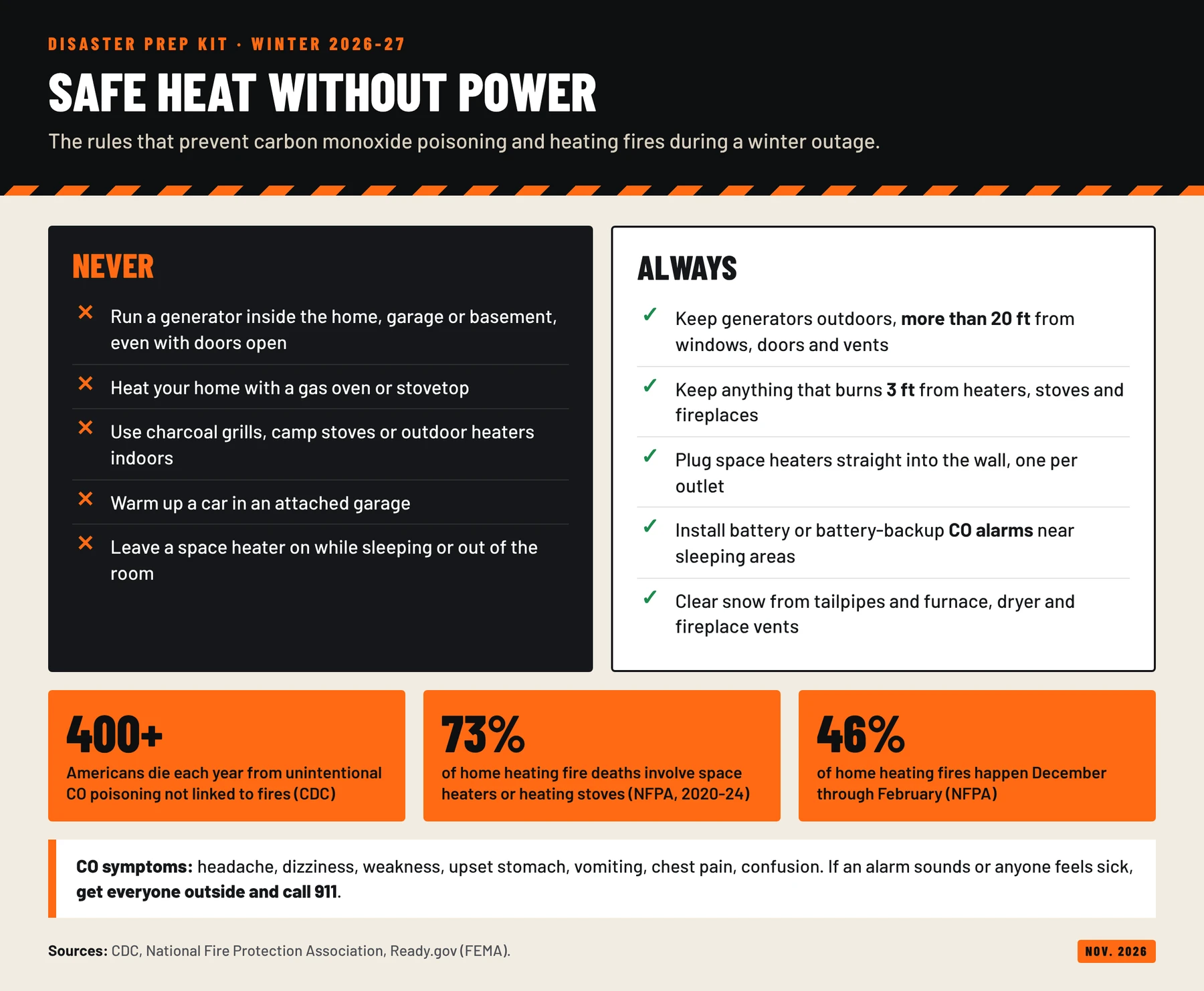
According to the CDC, more than 400 Americans die each year from unintentional CO poisoning not linked to fires, more than 100,000 visit an emergency department, and more than 14,000 are hospitalized. CO is odorless and colorless. People who are asleep can die before they ever feel symptoms.
- Never run a generator inside your home or garage, even with the doors and windows open. The CDC says to keep it outdoors and more than 20 feet from windows, doors and vents.
- Never heat your home with a gas oven or stovetop. Ready.gov warns this raises the risk of CO poisoning, fires and burns.
- Never use charcoal grills, camp stoves or outdoor heaters indoors.
- Never warm up a car in an attached garage, even with the door open. Clear snow from your tailpipe and from the vents of your dryer, furnace and fireplace.
- Install battery-powered or battery backup CO alarms near every sleeping area and on every level, and test them.
Know the symptoms: headache, dizziness, weakness, upset stomach, vomiting, chest pain and confusion. They're often described as "flu-like." If a CO alarm sounds or anyone has symptoms, get everyone into fresh air right away and call 911 from outside.
Space heaters and fireplaces
Heating equipment is a leading cause of home fires in winter. The National Fire Protection Association says U.S. fire departments responded to an average of about 37,365 home heating fires a year from 2020 to 2024, causing 417 civilian deaths a year. Nearly half (46%) happen from December through February. Space heaters and heating stoves were involved in 47% of those fires but 73% of the deaths.
NFPA's rules:
- Keep anything that can burn at least three feet from furnaces, fireplaces, wood stoves and space heaters.
- Turn space heaters off when you leave the room or go to sleep.
- Use only the fuel the manufacturer specifies in fuel-burning heaters.
- Plug a space heater directly into the wall, and use only one heat-producing appliance per outlet.
- Use a sturdy fireplace screen. Let ashes cool, then put them in a metal container away from the house.
- Have chimneys and heating systems inspected each year.
Signs of Cold Stress to Watch For
Ready.gov lists warning signs to know, especially for older adults, babies and anyone with health conditions:
- Frostbite: numbness, and white or grayish-yellow skin that feels firm or waxy, often on the face, fingers and toes.
- Hypothermia: shivering, exhaustion, confusion, fumbling hands, memory loss, slurred speech or drowsiness.
If you suspect hypothermia, Ready.gov says to get to a warm room, warm the center of the body first (chest, neck, head and groin), and keep the person dry and wrapped in warm blankets. A body temperature below 95°F is an emergency, so call 911. For frostbite, get to a warm room and soak in warm (not hot) water, but don't massage the area or use a heating pad. Also avoid overexertion when shoveling snow, which raises the risk of heart attack.
Don't Forget the Car
If you have to drive in a storm, or end up stuck, your car becomes your shelter. Keep the tank full, and carry blankets, warm clothes, water, snacks, a flashlight, jumper cables and sand or kitty litter for traction. Our winter car survival kit checklist has the full list.
Check on Your People
The most effective part of any outage plan is often a phone call. Before a storm, check on older relatives and neighbors, people who live alone, and anyone who relies on medical equipment. Agree on who checks on whom, and what happens if someone needs to move to a warmer place. If you haven't written down your household plan yet, our Thanksgiving storms and power outage guide and our grid-down preparation guide are good next steps.
Frequently Asked Questions About El Niño and Winter Power Outages
Will El Niño make winter 2026-27 mild?
On average, probably warmer than usual across much of the northern U.S., according to NOAA. But a seasonal outlook can't rule out cold snaps or ice storms. FERC says this El Niño is expected to raise the risk of polar vortex disruptions and extreme cold in the central and eastern U.S., and wetter conditions in the South raise the chance of ice when cold air arrives.
Is the power grid at risk of blackouts this winter?
NERC says every region has enough resources for a normal winter peak. The risk is in extreme, wide-area cold, when demand spikes and generators or fuel supply can fail at the same time. Most outages households experience will still come from local damage to lines from ice, wind and falling trees.
How long should I prepare to be without power?
Plan for at least three days. The American Red Cross suggests keeping food and water for at least two weeks in case of a long outage, and last January's ice storm left some areas without power for close to two weeks.
Is it safe to use a gas oven or stove to heat my home?
No. Ready.gov and the CDC both say never to heat your home with a gas oven or stovetop because of the risk of carbon monoxide poisoning and fire.
How far from the house should a generator be?
The CDC says more than 20 feet from any windows, doors and vents, and never inside a home or garage, even with the doors open. Use a battery-powered or battery backup CO alarm inside while it runs.
What is the safest way to stay warm in a power outage?
Pick one interior room, close it off, and layer clothing, blankets and sleeping bags. Only use heat sources designed for indoor use, keep them three feet from anything that can burn, and have working CO and smoke alarms. If your home gets dangerously cold, go to a warming center or somewhere with heat.
Sources
- NOAA, El Niño looms large over U.S. Winter Outlook (Oct. 15, 2026)
- NOAA Climate Prediction Center, Prognostic Discussion for Long-Lead Seasonal Outlooks (Nov. 19, 2026)
- FERC, Winter Energy Market & Electric Reliability Assessment (Nov. 19, 2026, PDF)
- NERC, Increasing Demand and El Niño Challenge Winter Grid Reliability (Nov. 18, 2026)
- NERC, 2026-2027 Winter Reliability Assessment (PDF)
- PowerOutage.us, Winter Storm Fern Analysis (Mar. 11, 2026)
- CDC, Carbon Monoxide (CO) Poisoning Basics
- NFPA, U.S. home heating fires peak during winter months (Jan. 22, 2026)
- Ready.gov (FEMA), Winter Weather
- Ready.gov (FEMA), Power Outages
- American Red Cross, Power Outage Safety