Banking System Cyberattack Preparedness: How to Protect Your Money and Family If Banks Go Down
Most of us pay for almost everything with a card or a phone. That works right up until the bank's systems, the card network, or the store's payment terminal stops working. A cyberattack on a bank, a ransomware hit on a payment processor, or even a bad software update can leave you unable to buy gas, groceries, or medicine for hours, days, or longer.
Banking system cyberattack preparedness isn't about panic. It's about having a plan, and a little cash, before you need it. This guide covers what has actually happened in recent outages, how much cash to keep and how to store it, which paper records to have on hand, and what to do if an outage drags on for weeks.
Why Banking System Cyberattack Preparedness Matters
Banks and payment networks are some of the most protected systems in the country, but they aren't immune. The Cybersecurity and Infrastructure Security Agency (CISA) says large-scale power outages, recent natural disasters, and an increase in the number and sophistication of cyberattacks show the wide range of risks facing the financial services sector.
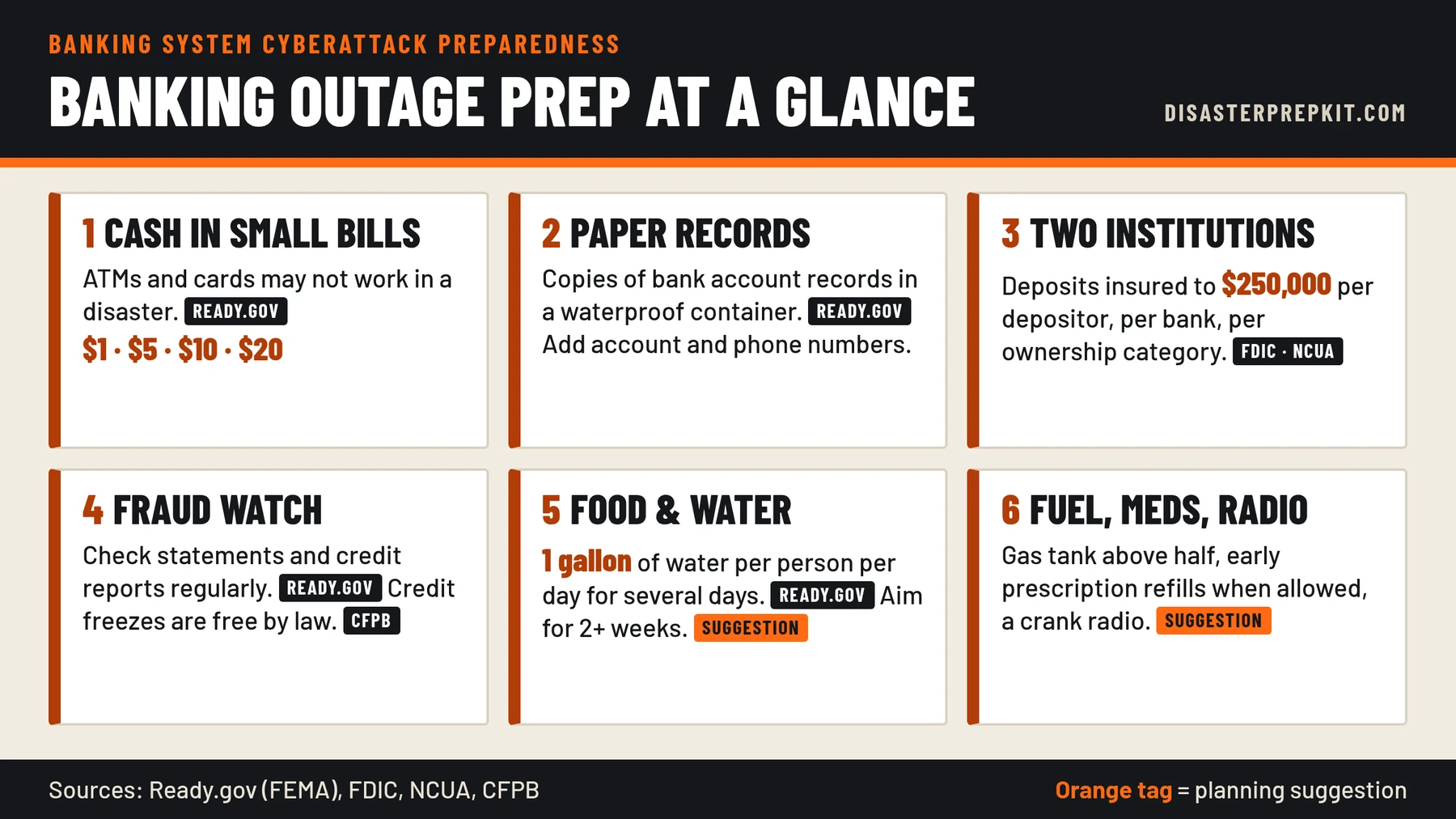
FEMA's Ready.gov puts the household lesson plainly: keep a small amount of cash at home in a safe place, and have small bills on hand because ATMs and credit cards may not work during a disaster when you need to buy supplies, fuel, or food.
What Recent Outages Looked Like
You don't have to imagine what a payment outage looks like. Several have already happened:
- Visa Europe, June 2018: a hardware failure in a Visa data center caused 5.2 million card transactions to fail across Europe, including 2.4 million in the UK. The Guardian reported queues at gas stations and shopping left at supermarket tills because customers couldn't pay.
- ICBC, November 2023: the U.S. Treasury says the LockBit ransomware group attacked the U.S. broker-dealer of the Industrial and Commercial Bank of China, disrupting the settlement of over $9 billion worth of assets backed by Treasury securities.
- Patelco Credit Union, June 2024: a ransomware attack shut down online banking and the mobile app for the California credit union's 455,000 members. More than a week later, members still couldn't use online banking or check balances, though ATMs kept working.
- CrowdStrike, July 2024: a faulty update from the security company CrowdStrike affected about 8.5 million Windows computers, according to Microsoft. It wasn't a hack, but the Guardian reported that Santander warned card payments may be affected, JPMorgan employees couldn't log on, and some UK shopkeepers put up "cash only" signs.
The pattern is the same each time. Cards and apps fail first, and people with a little cash and a few days of supplies get through it with far less stress.
What Happened at Chase and Bank of America
The two largest U.S. banks have both had recent outages and vendor data breaches. Here is what has actually been reported, and what hasn't been confirmed.
The November 2026 Chase Outage
On Monday, November 16, 2026, Chase customers reported trouble with online banking and transactions. JPMorgan Chase told CNBC that a "temporary issue related to a software bug in on-premise hardware systems" was making some transactions take longer than usual, that customers still had access to their accounts and funds, and that "there is no evidence it is cyber-related."
Fox Business reported that an FBI official traced the disruption to a software release the bank rolled out earlier that day, with no indication of malicious or external cyber activity. A Chase branch manager in Washington, D.C., said ATMs were working normally.
Chase said other banks may have seen slower transactions where Chase was a party to them. Customers of Bank of America, Wells Fargo and U.S. Bank also reported problems on Downdetector, according to the BBC, but Bank of America told Fox Business its own systems had been operating normally.
Separately, Cybernews reported that a new ransomware gang called n0n listed JPMorgan Chase as an alleged victim on its leak site. That is a criminal group's claim, not a confirmed breach, and Chase has not confirmed any connection to the outage.
Vendor Data Breaches at Both Banks
- Bank of America (2023): hackers got into Infosys McCamish Systems, a vendor that serviced Bank of America deferred compensation plans, around November 3, 2023. The LockBit ransomware group claimed the attack. Data for 57,028 Bank of America customers may have been exposed, including names, addresses, dates of birth and Social Security numbers. The notice said Bank of America's own systems were not compromised.
- JPMorgan Chase (2025): SitusAMC, a company that processes mortgage data for hundreds of lenders, discovered a breach on November 12, 2025. The New York Times reported that JPMorgan Chase, Citi and Morgan Stanley were among the institutions notified about possible customer data exposure. The FBI said it had found no operational impact on banking services.
- JPMorgan Chase (2026): in January 2026, JPMorgan told 659 private equity fund investors that their names, contact details, account numbers, Social Security numbers and ID numbers were in files copied from the law firm Fried Frank.
The October 2024 Bank of America Outage
On October 2, 2024, some Bank of America customers saw $0 or blank balances in the app and online banking, The Verge reported. The bank said the "technology issues have been fully resolved."
What These Incidents Teach
None of these events wiped out insured deposits. The outages came from software problems, and the data exposures came through outside vendors. In every case, the people best prepared were the ones who could see a paper statement, pay with cash for a few hours or days, and spot fraud early with account alerts and a credit freeze.
Step 1: Build a Cash Reserve in Small Bills
If banks and card networks go down, you'll still need to buy things. Cash is the backup that works when the power is on but the networks aren't, and it's the one payment method that doesn't depend on anyone's servers.
How Much Cash to Keep
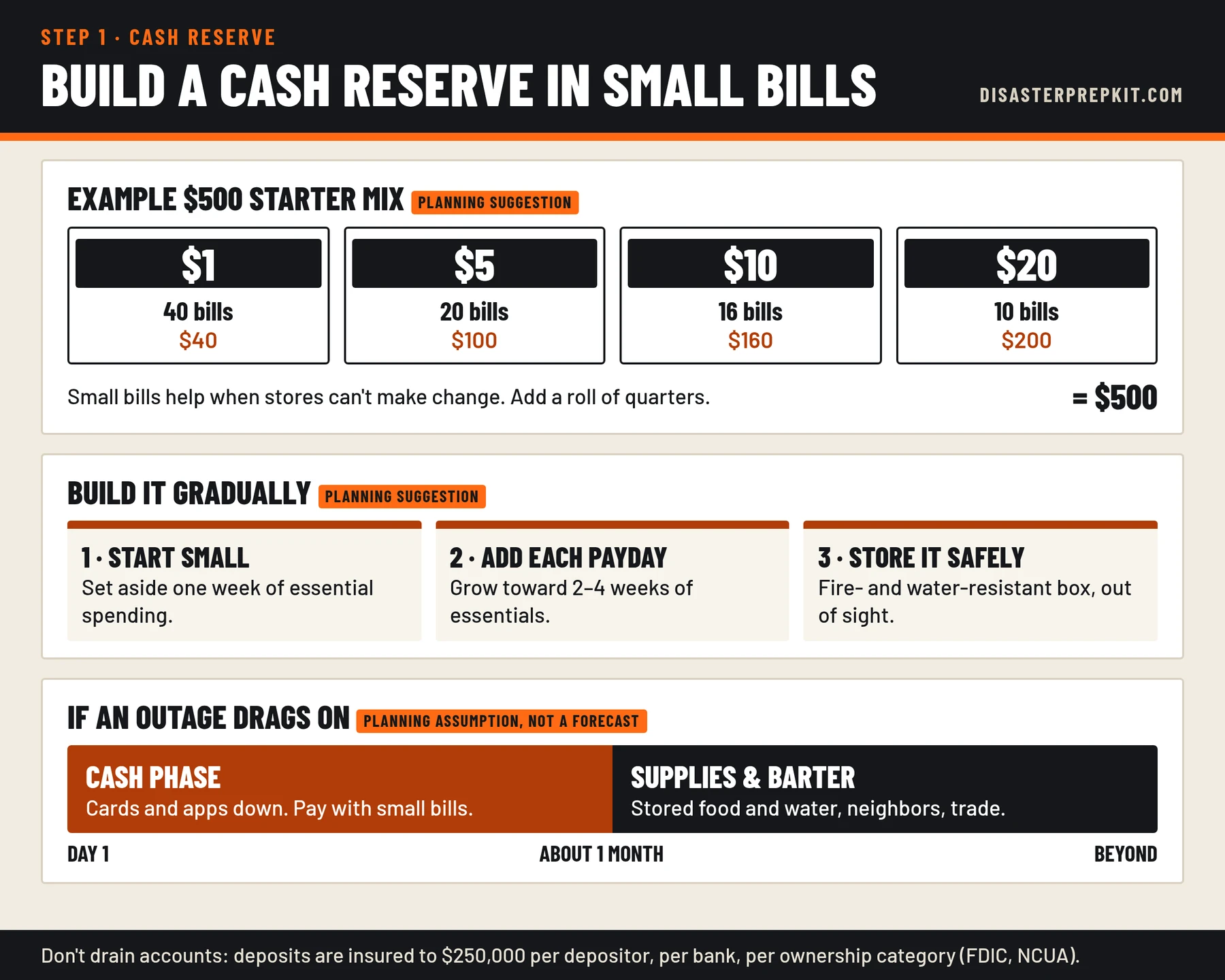
There's no official dollar amount. A practical target is enough to cover two to four weeks of essentials for your household: groceries, fuel, prescriptions, and a few unexpected costs. Start with a smaller goal, such as one week of spending, and add to it over time.
Why Small Bills Matter
Stores may not be able to make change when their registers and card readers are down. Ones, fives, tens, and twenties let you pay close to the exact amount. Keep a roll of quarters too, for vending machines, laundry, and parking.
Build It Gradually, Not in a Panic
Don't empty your accounts the moment you hear about a cyberattack. Sudden mass withdrawals are how bank runs start. When Silicon Valley Bank failed in 2023, the Federal Reserve's review found that depositors pulled more than $40 billion on March 9, 2023, and management expected to lose more than $100 billion the next day. Together that was roughly 85 percent of the bank's deposits. Withdrawals on that scale can turn a technical problem into a financial one.
Your insured deposits are protected even if a bank fails. The FDIC insures deposits up to $250,000 per depositor, per insured bank, for each ownership category, and says no depositor has lost a penny of FDIC-insured funds since it was founded in 1933. Credit union accounts get the same $250,000 coverage from the NCUA. A hack or outage may delay access to your money, but it doesn't erase insured balances.
So build your cash reserve a little at a time, with each paycheck, well before anything happens. That keeps you prepared without adding to a panic.
Store Cash Safely
- Keep it in a fire-resistant, water-resistant box or safe that's out of sight.
- Split it: some at home, a small amount in your car kit or go bag.
- Don't tell people outside your household where it is.
- Check it once or twice a year, and don't treat it as spending money.
For more on what goes in a go bag and car kit, see our 72-hour emergency kit guide and the emergency car prep kit checklist.
Step 2: Keep Paper Copies of Your Financial Records
If a bank's website and app are down, you may not be able to see your balance, recent transactions, or even the bank's phone number. Paper records fix that.
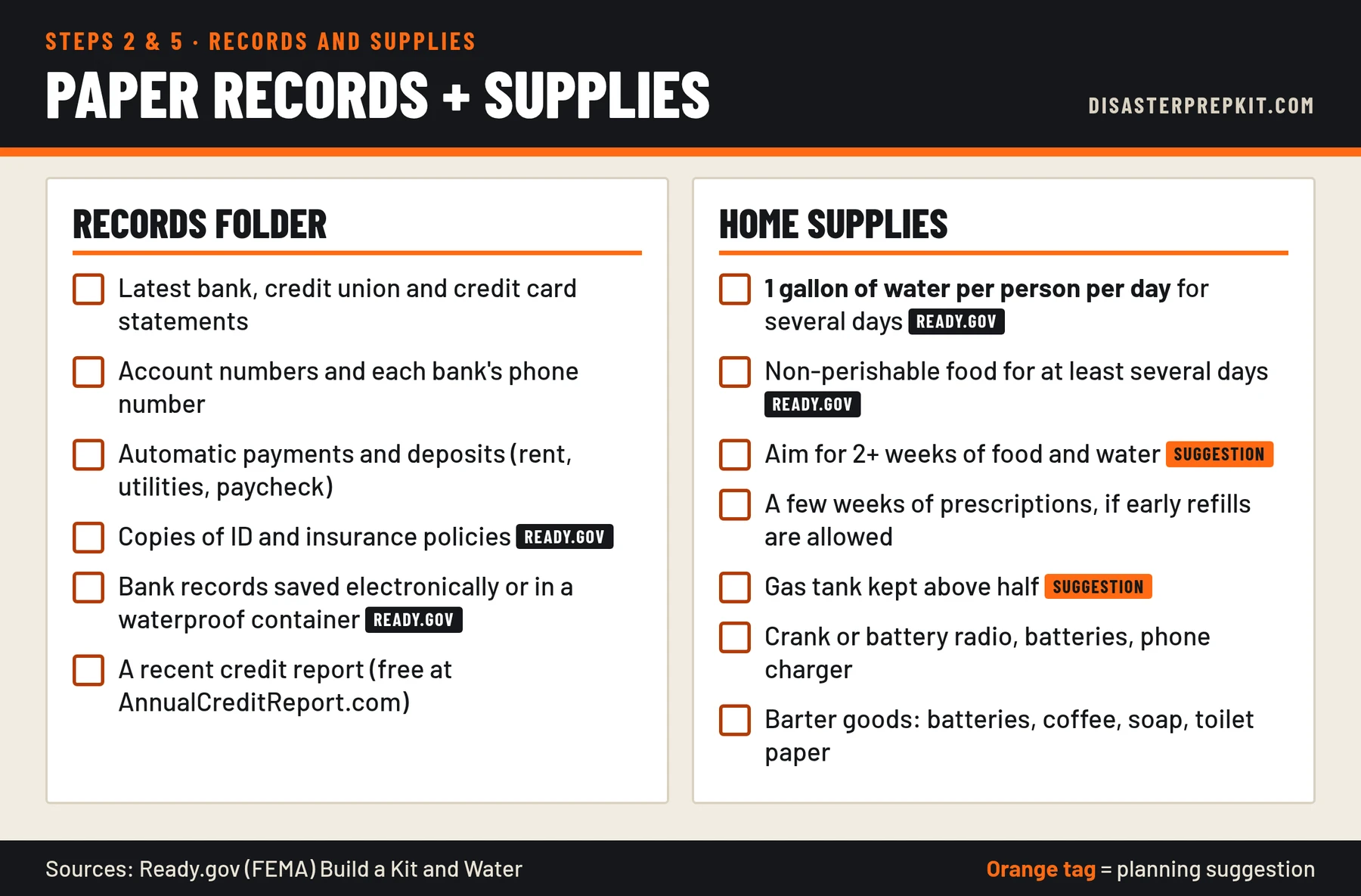
Ready.gov's emergency supply list includes copies of bank account records, saved electronically or in a waterproof, portable container. Put these in a folder or document bag:
- Your most recent bank, credit union, credit card, and brokerage statements
- Account numbers and the customer service phone numbers for each institution
- A list of automatic payments and deposits (mortgage or rent, utilities, paycheck, benefits)
- Copies of your ID, insurance policies, and important family documents
- A recent credit report, which you can get free at AnnualCreditReport.com
Update the folder every few months. Keep an encrypted backup on a USB drive as well. Our guide to building a cyber disaster emergency kit walks through the digital side.
Step 3: Spread Your Money Across More Than One Institution
When Patelco was hit, its members couldn't use online banking or check balances for more than a week. People who also had an account somewhere else could keep paying bills from it.
- Keep a second checking account at a different bank or credit union, with enough in it to cover a few weeks of bills.
- Carry cards from two different networks if you can, such as a Visa and a Mastercard. The 2018 outage hit Visa, not every network.
- Make sure you can log in to each account and know its phone number before you need it.
Staying under the FDIC and NCUA limits at each institution also keeps more of your money insured. You can check your coverage with the FDIC's deposit insurance guide.
Step 4: Watch for Fraud Before, During, and After an Attack
Criminals use bank outages and data breaches as cover. Expect fake texts and emails claiming to be from your bank, asking you to "verify" your account.
Ready.gov's cybersecurity guidance recommends checking your account statements and credit reports regularly, and during a cyberattack, checking your card and bank statements for charges you don't recognize and your credit reports for new accounts or loans you didn't open.
- Turn on account alerts for every purchase, withdrawal, and login, so you see problems fast.
- Freeze your credit. The CFPB notes that security freezes are free by law and can stop an identity thief from opening new accounts in your name.
- Never click links in unexpected messages. Call the number on the back of your card or on your paper statement instead.
- Report identity theft at IdentityTheft.gov if someone uses your information.
Learn the common tricks in our guides to text message scams (smishing) and wire fraud during real estate closings.
Step 5: Stock Food, Water, Medicine, and Fuel
Cash only helps if there's something to buy. In a short outage, it will get you through. In a long one, stores may run low or close, and having supplies at home matters more than money.
Ready.gov recommends storing at least one gallon of water per person per day for several days, for drinking and sanitation, and its supply list calls for at least a several-day supply of non-perishable food. For a banking crisis, aim higher: two weeks or more of food and water is a sensible goal for most households.
- Food your family will actually eat, plus a manual can opener
- Stored water, and a filter or purification method for refills
- At least a few weeks of prescription medicines, if your pharmacy and insurer allow early refills
- A full tank of gas, and a habit of not letting it drop below half
- Batteries, a battery or hand-crank radio, and a way to charge phones
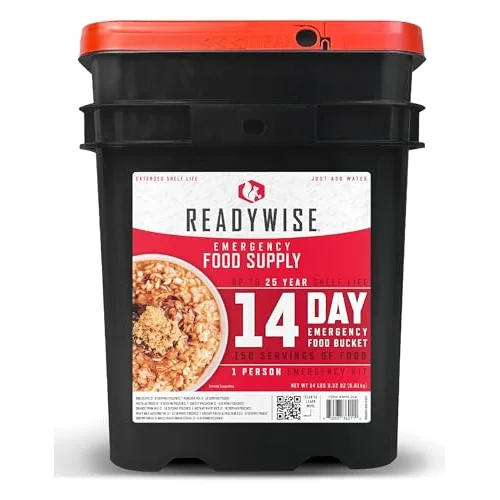
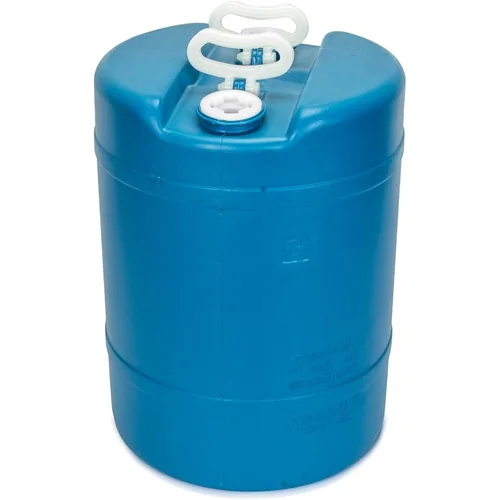
Our guides to storing water for emergencies, the best emergency food kits, and preparing for a grid-down scenario go into more detail.
If the Outage Lasts: After the First Month
Most payment outages so far have lasted hours or, at worst, a few weeks. But it's worth planning for something longer.
A reasonable planning assumption is that cash keeps working for roughly the first month of a serious, widespread banking disruption, as long as stores stay open and have stock. After that, if systems are still down, prices may rise, shelves may thin out, and more people will be getting food, water, and goods in other ways: from their own stored supplies, from neighbors, and through trade.
Barter Goods Worth Keeping
Useful barter items are things people use up every day and can't easily make. Buy a few extra of these when they're on sale:
- Batteries in common sizes
- Coffee, salt, sugar, and cooking oil
- Toilet paper, soap, and feminine hygiene products
- Over-the-counter medicines such as pain relievers
- Canned food and bottled water
- Fuel, stored safely in approved containers
Skills count too. Knowing first aid, basic repairs, gardening, or how to purify water makes you valuable to the people around you.
Lean on Your Community
Neighbors who know each other share information, pool supplies, and look out for older or disabled residents. Get to know a few households on your street now. Our article on protecting your family in an emergency covers how to set up a simple family and neighborhood plan.
Your Banking Outage Preparedness Checklist
- Cash in small bills for two to four weeks of essentials, built up gradually and stored safely
- Paper statements, account numbers, and bank phone numbers in a waterproof folder
- Accounts at two or more banks or credit unions, and cards on different networks
- Account alerts on, credit frozen, and a habit of checking statements
- Two weeks or more of food, water, and medicine
- A full gas tank and a radio with spare batteries
- A small stock of barter goods and a few neighbors you can count on
For the full list of household supplies, see our emergency kit checklist for beginners.
Frequently Asked Questions About Banking System Cyberattack Preparedness
How much cash should I keep at home for emergencies?
There's no official amount. Ready.gov recommends keeping a small amount of cash at home in small bills. A practical target is enough for two to four weeks of essentials such as food, fuel, and medicine, built up gradually.
Should I withdraw all my money if banks are hacked?
No. Mass withdrawals can turn a technical outage into a bank run, and insured deposits are protected up to $250,000 per depositor, per insured bank, per ownership category by the FDIC, with the same limit at federally insured credit unions through the NCUA. Keep a cash reserve you've built ahead of time, and leave the rest insured.
Is my money safe if my bank suffers a cyberattack?
A cyberattack can delay access to your money, as Patelco members found in 2024, but it doesn't erase insured balances. Keep paper statements so you can prove what you had, and watch your accounts for fraud afterward.
Were Chase and Bank of America hacked?
Chase said its November 16, 2026 outage was caused by a software bug, not a cyberattack, and Bank of America said its systems operated normally that day. A ransomware gang has claimed JPMorgan Chase as a victim, but no breach has been confirmed. Both banks have had customer data exposed through vendor breaches: Infosys McCamish for Bank of America in 2023, and SitusAMC and the law firm Fried Frank for JPMorgan Chase.
Why keep small bills instead of hundreds?
When card readers and registers are down, stores may not be able to make change. Ones, fives, tens, and twenties let you pay close to the exact amount.
How long would cash be useful in a banking collapse?
In most real outages, cash has been useful for the hours or weeks the disruption lasted. In a much longer crisis, a reasonable planning assumption is about a month, after which stored supplies, community help, and barter matter more than money.
Sources
- Ready.gov (FEMA), Financial Preparedness
- Ready.gov (FEMA), Build a Kit
- Ready.gov (FEMA), Water
- Ready.gov (FEMA), Cybersecurity
- FDIC, Understanding Deposit Insurance
- NCUA, Share Insurance Coverage
- Federal Reserve, Review of the Federal Reserve's Supervision and Regulation of Silicon Valley Bank (April 2023)
- CISA, Financial Services Sector
- CFPB, What is a credit freeze or security freeze on my credit report?
- U.S. Treasury, United States Sanctions Affiliates of Russia-Based LockBit Ransomware Group
- Microsoft, Helping our customers through the CrowdStrike outage (July 20, 2024)
- The Guardian, From trains to retail, how CrowdStrike outage caused havoc across industries (July 19, 2024)
- The Guardian, Visa admits 5m payments failed over a broken switch (June 19, 2018)
- CBS San Francisco, Patelco Credit Union banking services outage grinds on after last week's ransomware attack (July 2024)
- IdentityTheft.gov (FTC)
- CNBC, JPMorgan Chase says temporary software bug is affecting consumer banking (Nov. 16, 2026)
- Fox Business, JPMorgan Chase systems recovering following hourslong nationwide technical outage (Nov. 16, 2026)
- BBC News live, Outages reported at major US banks including Chase and Bank of America (Nov. 16, 2026)
- Cybernews, Visa confirms cyberattack as hackers claim JPMorgan was hit too (Nov. 17, 2026)
- Cybernews, Bank of America customer info exposed via third party breach (Feb. 14, 2024)
- CSO Online, JPMorgan, Citi, Morgan Stanley assess fallout from SitusAMC data breach
- SecurityWeek, After Goldman, JPMorgan Discloses Law Firm Data Breach (Jan. 13, 2026)
- The Verge, A Bank of America outage showed customers blanked-out account balances (Oct. 2, 2024)